 EWP
EWP 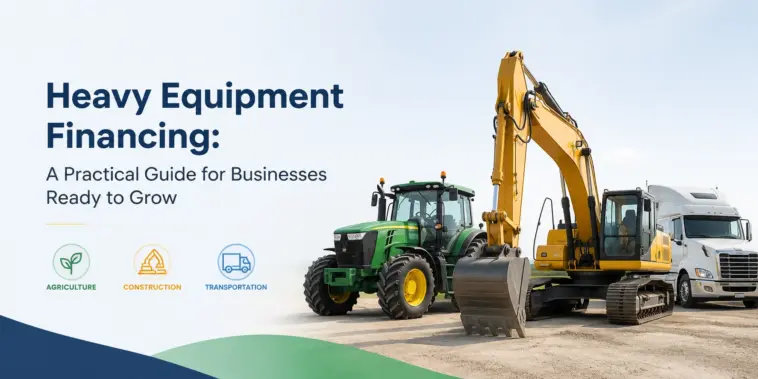
For businesses in agriculture, construction, and transportation, equipment is not a luxury — it is the core production asset. A farming operation without the right tractor falls behind during planting season. A construction company without adequate machinery cannot bid competitively on larger contracts. A transportation fleet running aging equipment faces maintenance costs that eat directly into margins and reliability that clients will not tolerate for long.
The challenge for most businesses is not identifying what equipment they need. It is finding a financially viable path to acquiring it without compromising the cash reserves that keep day-to-day operations stable. That is precisely the problem that purpose-built heavy equipment financing is designed to solve. Companies like Thirty3 Capital — a specialist equipment financing firm serving agriculture, construction, and transportation businesses across the United States — offer tailored financing options specifically built for heavy machinery acquisitions, including asset-backed financing structures and monthly payment planning tools that help businesses secure the equipment they need while managing costs through flexible, strategic financing solutions. For any business owner evaluating how to fund an equipment acquisition, understanding how these financing solutions work, what options are available, and what separates a strong lending partner from a generic one is the starting point for making a sound decision.
Why Cash Purchases Rarely Make Sense for Heavy Equipment
The instinct to avoid debt is understandable, and for many business expenses it is the right call. Heavy equipment is different. Here is why financing almost always makes more strategic sense than outright cash purchase:
Capital Preservation
Heavy equipment — excavators, tractors, semi-trucks, trailers, loaders, irrigation systems — carries price tags that range from tens of thousands to several hundred thousand dollars per unit. Paying cash for a single piece of equipment at that price point can consume working capital reserves that a business needs for payroll, materials, operating expenses, and the unexpected costs that arise in any industry.
A business that depletes its cash reserves on equipment is a business that has reduced its ability to respond to opportunities and weather setbacks. Financing preserves that operational flexibility.
Matched Cash Flow
Equipment financing structures payments around a predictable monthly schedule. For businesses with seasonal revenue patterns — common in agriculture and construction — the ability to negotiate payment terms that align with income cycles is a meaningful advantage over a one-time capital outlay.
When the equipment being financed is generating revenue — which heavy machinery typically does directly — the monthly payment can often be substantially covered or fully offset by the income the equipment produces. The asset pays for itself over time while the business retains its cash.
Tax Advantages
Financed equipment purchases often carry tax advantages that cash purchases also provide, including Section 179 deductions and bonus depreciation provisions under the US tax code, which allow businesses to deduct a significant portion of equipment costs in the year of acquisition. Consult a qualified tax professional to understand how these provisions apply to your specific situation and financing structure.
Access to Better Equipment
Financing expands what is financially possible. A business that can only spend available cash may be forced to purchase older, less reliable used equipment. A business with access to financing can acquire newer, more capable equipment that improves productivity, reduces maintenance costs, and qualifies for better warranties.
The Main Types of Heavy Equipment Financing
Understanding the financing structures available is essential for selecting the one that best fits a business’s goals and financial situation.
Equipment Loans
An equipment loan works much like a traditional business loan but is secured by the equipment being purchased. The lender provides the capital to purchase the equipment, the business takes ownership and makes fixed monthly payments over the agreed loan term, and the lender holds a security interest in the equipment until the loan is repaid.
At the end of the loan term, the business owns the equipment outright with no further obligation to the lender.
Best for: Businesses that intend to keep the equipment long-term, want to build equity in the asset, and plan to use the equipment beyond the financing term. Also well-suited for equipment that holds its value over time.
Key variables: Loan amount, interest rate, loan term (typically 36 to 84 months), and any down payment requirement.
Equipment Leasing
An equipment lease is a financing structure in which the lender purchases the equipment and the business pays for the right to use it over a defined period. At the end of the lease term, the business typically has the option to purchase the equipment at a predetermined residual value, return it, or in some cases renew the lease.
Best for: Businesses that regularly upgrade equipment to stay current with technology, that want lower monthly payments than a purchase loan would require, or that prefer to match financing term to expected equipment useful life.
Key variables: Monthly lease payment, lease term, residual value at end of term, and purchase option terms.
Asset-Backed Financing
Asset-backed financing uses the equipment itself — and potentially other business assets — as collateral for the loan. Because the lender has a secured interest in tangible assets with established market value, this structure can make financing accessible to businesses that may not qualify for unsecured credit products, or that want to leverage their existing asset base to secure better financing terms.
For businesses with strong equipment inventories, asset-backed structures can provide access to significant capital at competitive rates by demonstrating to the lender that the collateral adequately supports the loan amount.
Used Equipment Financing
A common misconception is that financing is primarily available for new equipment. Most specialized equipment lenders — including those focused on heavy machinery — offer financing for used equipment as well. Used equipment financing typically involves somewhat different underwriting criteria, with the lender assessing the age, condition, and remaining useful life of the equipment alongside the creditworthiness of the borrowing business.
For businesses where the financial case for used equipment is strong — lower purchase price, proven reliability for the application — used equipment financing can deliver excellent value.
How to Use a Heavy Equipment Financing Calculator
One of the most practically useful tools any equipment financing lender can offer is an online payment calculator. Before committing to a financing structure or beginning a formal application, a heavy equipment financing calculator allows business owners to model different scenarios and understand the monthly payment implications of varying loan amounts, terms, and residual values.
What the Calculator Helps You Determine
Monthly payment at different loan amounts. If you are considering equipment priced between $150,000 and $250,000, you can quickly model what each price point means for your monthly cash flow at a given term.
Impact of loan term on monthly payment. A 36-month term produces significantly higher monthly payments than a 72-month term on the same loan amount. The calculator lets you see exactly what each term option costs per month and allows you to find the term that fits your cash flow without overextending.
Residual value in lease structures. For leases, the residual percentage — the percentage of the equipment’s original value that remains at the end of the term — directly affects the monthly payment. A higher residual means lower monthly payments but a larger purchase price if you elect to buy the equipment at lease end.
Total cost of financing. Beyond the monthly payment, the calculator can help you understand the total amount paid over the life of the financing, which allows for an informed comparison between financing options and a cash purchase scenario.
Using a financing calculator before entering any conversation with a lender puts a business owner in a significantly stronger position — they arrive with a realistic understanding of what they can afford monthly, what loan amounts are within reach, and what terms make the most financial sense for their situation.
What Lenders Evaluate in Equipment Financing Applications
Understanding the underwriting criteria lenders apply helps businesses prepare stronger applications and set realistic expectations about the financing terms they are likely to qualify for.
Business Credit and Financial History
Lenders assess the creditworthiness of the borrowing business, including payment history on existing obligations, time in business, and overall financial health. Established businesses with clean credit histories qualify for the most competitive rates and terms. Newer businesses or those with credit challenges may still qualify but may face higher rates or additional requirements.
Time in Business
Most equipment lenders have minimum time-in-business requirements. Businesses that have operated for two or more years are generally viewed as lower risk than startups. Thirty3 Capital, for example, focuses on serving established businesses rather than early-stage ventures.
Equipment Type and Age
The equipment being financed is itself a factor in underwriting. Lenders assess the market value of the equipment, its expected useful life, and how readily it could be liquidated if required. Equipment with strong resale markets and long service lives — agricultural tractors, semi-trucks, construction excavators — supports better financing terms than highly specialized equipment with limited secondary markets.
Down Payment
In some cases, a down payment may be required or may improve the financing terms available. A down payment reduces the lender’s exposure and demonstrates the borrower’s equity commitment in the transaction. Businesses with strong credit profiles may have access to financing with little or no down payment required, while others may benefit from putting capital down to improve their terms.
Industries That Rely on Heavy Equipment Financing
Agriculture
Farming operations depend on equipment with significant acquisition costs — tractors, combine harvesters, irrigation systems, grain handling equipment, livestock trailers, and more. The seasonal cash flow patterns of agricultural businesses make financing particularly well-suited to the industry. Revenue concentrations around harvest periods can be matched with flexible payment structures that reduce financial pressure during lower-income months.
Financing allows farming operations to acquire equipment that increases yield and efficiency — investments that pay back through improved productivity rather than drawing down the capital reserves that sustain the operation year-round.
Construction
The construction industry’s revenue model is project-based, and the ability to bid on and win larger, more profitable projects often depends directly on equipment capability. A contractor with access to the right excavator, loader, or crane can compete for contracts that would otherwise be out of reach. Financing that enables equipment acquisition ahead of a project — rather than after profits from the project are banked — allows construction businesses to grow their capacity and revenue simultaneously.
Fast approval timelines matter in construction, where equipment needs can emerge quickly. Financing partners who can deliver decisions within 24 hours align with the pace at which the industry operates.
Transportation
Owner-operators and fleet operators in the trucking and freight sector face continuous pressure to maintain modern, reliable equipment. Aging trucks and trailers generate repair costs that erode margins and create service reliability problems. Financing new or quality used equipment allows transportation businesses to maintain fleet quality without the capital disruption of large purchase transactions.
For owner-operators in particular, where the equipment is directly tied to income-generating capacity, the monthly payment calculus is relatively straightforward: can the financed equipment generate more revenue than the loan costs? For modern, reliable equipment in active use, the answer is typically yes.
What to Look for in a Heavy Equipment Financing Partner
Not all equipment lenders are equivalent. For businesses in agriculture, construction, and transportation, the right financing partner brings more than just capital — they bring industry understanding, process efficiency, and financing structures genuinely built for how these businesses operate.
Industry Specialization
A lender who focuses on heavy equipment financing in your specific industries understands the seasonal dynamics of agricultural businesses, the project-cycle economics of construction, and the fleet considerations of transportation operators. That understanding is reflected in financing structures, payment flexibility, and the ability to evaluate equipment value accurately.
Application Simplicity and Speed
Traditional bank financing for equipment can involve lengthy applications, extensive documentation requirements, and approval timelines measured in weeks. Equipment-specialist lenders have streamlined this process significantly. Single-page applications for loans up to $600,000 and approval decisions within 24 hours reflect a financing model built around business owners who cannot afford to wait for equipment they need now.
Transparent Terms
Equipment financing should be straightforward. The monthly payment, total cost, interest rate, term, and any applicable fees should be clearly communicated before any agreement is signed. Lenders who present financing in plain language — without complex jargon or buried costs — are demonstrating the kind of transparency that makes for a productive long-term relationship.
Flexibility Across Equipment Types and Ages
A strong financing partner can accommodate both new and used equipment, a range of loan amounts, and varied term structures. This flexibility means the financing solution can be calibrated to the specific acquisition rather than forcing the business to fit a rigid product structure.
Steps to Securing Heavy Equipment Financing
The process of moving from equipment need to financed acquisition is straightforward with the right partner:
Step 1: Identify the Equipment Define exactly what you need — make, model, age, condition, and price — before beginning a financing conversation. Having specific equipment in mind allows the lender to assess the collateral accurately and provide precise financing terms.
Step 2: Use the Payment Calculator Run your scenarios through an online financing calculator before applying. Understand what monthly payment fits your cash flow, what loan amount that payment supports, and what term structure makes the most sense for your situation.
Step 3: Gather Basic Business Information Most streamlined applications require business name, time in operation, estimated annual revenue, and basic contact information. Have this ready before beginning the application.
Step 4: Apply Submit the application. With specialized lenders, this is typically a single-page online process that takes minutes rather than hours.
Step 5: Review the Offer When the financing decision comes back — often within 24 hours — review the terms carefully. Compare the monthly payment to your cash flow capacity, the total cost to alternative options, and the flexibility of the structure to your anticipated needs.
Step 6: Close and Acquire Once terms are accepted, the lender funds the transaction and the equipment acquisition proceeds. In most cases, the business has the equipment within days of application.
Conclusion: Financing as a Growth Tool, Not a Last Resort
The most successful businesses in equipment-intensive industries treat financing not as a fallback when cash is unavailable, but as a strategic tool for managed growth. Financing preserves capital, aligns costs with revenue generation, and makes it possible to acquire the equipment that drives competitive advantage on a timeline that matches market opportunity rather than savings accumulation.
For businesses in agriculture, construction, and transportation, the question is not whether financing is available — it is whether the right financing partner, with industry-specific expertise and a process built for how real businesses operate, is in place to support equipment acquisition as a consistent, strategic capability rather than an occasional, stressful transaction.