
 EWP
EWP 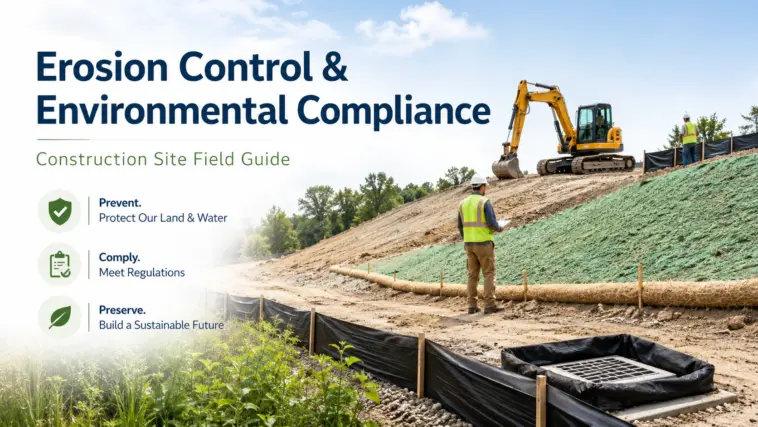
It is a scenario that plays out more often than contractors like to admit. A project is moving on schedule. Grading is complete, utilities are in, and framing is underway. Then it rains. Sediment-laden runoff leaves the site, reaches a nearby waterway or storm drain, and a regulator shows up the following week. The citation that follows — potentially tens of thousands of dollars per day under Clean Water Act authority — exceeds what proper erosion control would have cost for the entire project.
Environmental compliance on construction sites is not bureaucratic overhead. It is financial risk management. And for projects disturbing one acre or more of land, it is a federal legal requirement with real enforcement consequences for contractors, developers, and municipalities who treat it as an afterthought.
The good news is that compliance is not complicated when it is approached correctly from project inception. Firms like environmental installation services specialists Syman Inc. — founded in 2007 and now Idaho’s leading erosion and sediment control company, serving contractors, developers, and public agencies across the Northwest with SWPPP design, BMP installation, site inspections, hydroseeding, and regulatory compliance consulting — have turned what many contractors experience as a stressful, confusing obligation into a streamlined, predictable process. They help contractors ensure projects meet federal and state standards while genuinely protecting the surrounding environment, not just checking boxes on a compliance form.
This field guide covers everything a contractor, developer, or project manager needs to understand about erosion control and environmental compliance — from the regulatory framework that creates the obligations, through the practical tools that meet them, to the financial logic of doing it right from day one.
The Regulatory Foundation: Why This Is Not Optional
The Clean Water Act and the NPDES Permit Program
The National Pollutant Discharge Elimination System (NPDES) permit program, administered by the U.S. Environmental Protection Agency and delegated to individual state environmental agencies, is the legal framework governing stormwater discharges from construction sites. Under this framework, any construction project that disturbs one or more acres — or is part of a larger common development plan regardless of individual lot size — must obtain coverage under a stormwater general permit before earth-disturbing activities begin.
Permit coverage is not automatic. It requires the preparation and implementation of a Stormwater Pollution Prevention Plan, the installation of required Best Management Practices before grading begins, and ongoing inspection and maintenance of those BMPs throughout the construction period. Violations — whether from failing to obtain permit coverage, operating without an adequate SWPPP, failing to maintain BMPs, or discharging sediment-laden stormwater — are subject to civil penalties that can reach $25,000 per day per violation under federal authority, with additional state-level penalties layered on top.
State-Level Regulatory Variation
While the NPDES framework establishes the federal baseline, individual states administer their own stormwater programs with requirements that vary in ways that matter practically to contractors. In Idaho, the Department of Environmental Quality (Idaho DEQ) administers the stormwater program and has specific requirements for SWPPP content, BMP selection, inspection frequency, and corrective action timelines that contractors must understand and follow.
States bordering Idaho — Oregon, Washington, Nevada, Utah, Montana, and Wyoming — each have their own stormwater program administrators and specific requirements. Contractors working across state lines must navigate this variation, either by maintaining expertise in each state’s specific requirements or by partnering with a compliance firm that operates across the region and understands what each state’s regulators specifically look for.
Federal Lands and Tribal Reservations
Projects on federal lands or tribal reservations face an additional layer of regulatory complexity. Federal land management agencies — the Forest Service, Bureau of Land Management, Army Corps of Engineers, and others — each have specific environmental compliance requirements for construction projects on their lands, often exceeding state-level requirements. Tribal environmental programs operate with sovereignty that creates unique compliance frameworks. Contractors working on these projects need environmental compliance partners with specific federal and tribal land experience.
The SWPPP: The Document That Holds Everything Together
The Stormwater Pollution Prevention Plan is the central compliance document for any permitted construction project. Understanding what a proper SWPPP actually contains — and why it matters beyond satisfying the permit requirement — is fundamental to effective compliance.
What a Complete SWPPP Must Address
A properly written stormwater pollution prevention plan is a site-specific document — not a template with project details filled in, but a genuine engineering document that reflects the specific characteristics of the site and the specific risks posed by the planned construction activities.
A complete SWPPP addresses:
Site description and project information. The nature and sequence of construction activities, total acreage to be disturbed, receiving waters that could be affected by discharges from the site, existing drainage patterns, and the general location of all proposed construction.
Pollution source identification. All potential sources of pollutants — not just sediment, but concrete washout, vehicle fueling areas, portable toilets, material storage areas, paint and solvent handling, dewatering discharge points, and any other construction activity that could generate stormwater contamination.
BMP selection and location. For each identified pollution source, the specific BMPs selected to control it, their installation locations shown on a site map, the criteria used to select each BMP, and the performance standards they are expected to meet.
Inspection and maintenance procedures. The frequency of SWPPP inspections (typically every seven days and within 24 hours of a storm event exceeding a defined threshold), who is qualified to conduct them, what they must document, and what constitutes a required corrective action with associated timelines.
Corrective action procedures. The specific steps to be taken when an inspection identifies a BMP that is not functioning as designed, a discharge that has occurred, or a condition that creates an unacceptable pollution risk.
Final stabilization criteria. The conditions that must be met before the NPDES permit coverage can be terminated — typically either 70% uniform vegetative cover on all disturbed areas or equivalent permanent stabilization measures.
The SWPPP as a Living Document
A critical point that is frequently misunderstood: the SWPPP is not a document written at project inception and filed away. It is a living document that must be updated whenever site conditions change in ways that affect stormwater management — when grading advances to new areas, when seasonal conditions change BMP performance requirements, when construction activities create new pollutant exposure risks, or when a corrective action requires a change in BMP approach.
Inspectors reviewing a project’s SWPPP check both whether the document is technically adequate and whether it accurately reflects current site conditions. An outdated SWPPP that no longer matches site conditions is a compliance deficiency regardless of how thorough it was when originally written.
Best Management Practices: Selecting, Installing, and Maintaining the Right Controls
Best Management Practices are the physical, operational, and procedural controls that implement the SWPPP on the ground. BMP selection is not a catalog exercise — the right BMPs for a given site depend on slope, soil type, construction phase, seasonal weather patterns, proximity to sensitive receiving waters, and the specific activities generating pollution risk.
Perimeter and Sediment Containment BMPs
Silt fence is one of the most widely used perimeter controls for construction sites — and one of the most frequently installed incorrectly. A silt fence installed without proper J-trenching into the soil, without adequate post spacing, or without end returns that prevent flow around the barrier provides essentially no protective function. Proper silt fence installation requires specific installation technique; a silt fence that is visually intact but functionally ineffective is a common cause of compliance violations.
Wattles and fiber rolls — cylindrical barriers made from straw, coconut fiber, or other materials — are effective on slopes for intercepting sheet flow and reducing erosive velocity. They must be properly anchored into the soil and positioned at appropriate spacing intervals based on slope gradient and length.
Sediment basins and traps provide settling capacity for runoff from larger disturbed areas, capturing sediment before it leaves the site. Their design — basin sizing, inlet and outlet configuration, cleanout access — must be appropriate for the drainage area they serve.
Inlet protection — filters, bags, or barriers placed at storm drain inlets — prevents sediment from entering the storm drainage system. These require more frequent maintenance than perimeter controls because they become quickly loaded with sediment and lose their effectiveness if not regularly cleaned or replaced.
Slope Protection BMPs
On steeper slopes, the erosive energy of rainfall impact and sheet flow requires more aggressive stabilization measures than flat-area perimeter controls provide.
Erosion control blankets and mats — woven or non-woven materials anchored to the slope surface — protect soil from rainfall impact, slow surface flow velocity, and provide a seedbed that supports vegetation establishment. Material selection depends on slope gradient, soil erodibility, and whether a temporary or permanent solution is required.
Bonded fiber matrix (BFM) is a hydraulically applied product that creates a continuous, bonded layer of fiber and tackifier over the soil surface, providing immediate protection against rainfall and runoff and supporting vegetation establishment. It is particularly effective on steep slopes or in areas where blanket installation is impractical.
Check dams in swales and drainage channels interrupt flow, reduce channel velocity, and promote sediment deposition within the controlled structure rather than allowing it to transport off site.
Housekeeping and Non-Sediment BMPs
Sediment control is the most prominent aspect of construction site stormwater management, but it is not the only one. The SWPPP must also address:
Concrete washout areas — designated, contained areas where concrete trucks and pump equipment can wash out without the alkaline washwater entering stormwater drainage. Concrete washwater has a pH of 11–13 and is highly toxic to aquatic life; uncontrolled concrete washout is a frequent violation source.
Vehicle and equipment fueling areas — fueling should occur in designated areas away from drainage features, with spill response materials immediately available. Drip pans under stored equipment and regular inspection for fluid leaks prevent petroleum contamination of stormwater.
Material storage — paints, solvents, adhesives, and other materials must be stored in ways that prevent stormwater contact. Secondary containment for liquid materials in areas with stormwater exposure risk is a standard requirement.
Portable toilet placement — portable sanitation facilities must be positioned away from drainage channels and storm drain inlets to prevent contamination from accidental tipping or overflow.
Hydroseeding: The Most Effective Tool for Rapid Vegetation Establishment
Vegetation is the ultimate erosion control measure. A site with established vegetative cover experiences dramatically lower erosion rates than bare soil regardless of what other BMPs are installed. The challenge on construction sites is time — vegetation takes weeks to establish, and sites remain at high erosion risk during that establishment period.
Hydroseeding significantly compresses the establishment timeline compared to dry seeding, making it the preferred revegetation method for construction sites where meeting permit closure requirements efficiently is a priority.
How Hydroseeding Works
Boise hydroseeding — and hydroseeding across the Northwest region — involves the hydraulic application of a slurry containing seed, mulch fiber, fertilizer, tackifier, and water, applied under pressure using specialized equipment to coat the soil surface with a consistent, adhered layer.
The mulch component of the slurry performs multiple functions simultaneously: it reduces rainfall impact on the soil surface, retains soil moisture to support seed germination, moderates soil temperature extremes that can inhibit germination, and provides immediate surface protection against runoff while vegetation establishes.
The tackifier component bonds the slurry to the soil surface, preventing the applied material from washing off in rain events before the seed has had time to germinate and root into the soil.
The seed component is tailored to the site’s specific requirements — local climate, soil type, slope aspect, sun exposure, ultimate land use, and any agency-specific seed mix requirements that apply. Using appropriate seed species and varieties is not a detail; the wrong seed mix produces poor establishment rates, fails to meet permit closure requirements, or establishes vegetation that creates long-term management problems.
When Hydroseeding Is the Right Choice
Hydroseeding is the preferred revegetation approach for:
Large disturbed areas where hand-seeding would be impractical and dry seed broadcast would produce poor, uneven establishment.
Steep slopes where conventional equipment cannot safely operate and where rapid surface protection is critical to prevent erosive failure.
Roadway embankments where the combination of steep slopes, disturbed subsoil, and exposure to traffic-generated turbulence creates challenging revegetation conditions.
Final stabilization on permitted projects where achieving the vegetative cover threshold required for permit termination on a defined timeline is a project closure objective.
Areas adjacent to sensitive receiving waters where rapid, reliable vegetation establishment is necessary to reduce erosion risk during the establishment period.
Seasonal Timing Considerations
In the Northwest, seasonal timing significantly affects hydroseeding success rates. Fall applications — particularly in September and October — take advantage of cooling temperatures, reduced evapotranspiration stress, and fall rainfall patterns to produce strong establishment rates, with dormant root systems ready to break dormancy and grow rapidly the following spring.
Spring applications benefit from warming temperatures and spring rainfall but must contend with the compressed window between soil thaw and the dry summer season. Summer applications in the Northwest require irrigation to support establishment and are generally avoided on sites where irrigation is not practical.
Understanding these seasonal dynamics — and planning revegetation activities around them — is a practical knowledge that experienced regional contractors bring to site-specific hydroseeding recommendations.
Site Inspections: The Continuous Compliance Mechanism
A SWPPP and BMPs that are properly designed and installed at project inception will not maintain their effectiveness through the full construction period without ongoing inspection and maintenance. Conditions change — storms damage BMPs, construction activities alter drainage patterns, sediment accumulates and must be removed, and new activities create new pollution exposure points.
Who Can Conduct SWPPP Inspections
NPDES permit requirements specify that SWPPP inspections must be conducted by a “qualified person” with site-specific knowledge of the SWPPP and the BMPs it requires. Many states define additional qualification requirements — Idaho DEQ, for example, has specific expectations for inspector qualifications on larger or more complex sites.
The practical reality is that inspections conducted by personnel who genuinely understand what they are looking for — what a functioning BMP looks like versus one that is failing, what conditions constitute a required corrective action, and how to document findings in a way that demonstrates compliance — produce fundamentally different results than inspections conducted by project personnel who treat them as a paperwork obligation.
What Inspectors Are Actually Looking For
When a regulatory inspector reviews a site, they are evaluating several dimensions simultaneously:
SWPPP adequacy. Does the SWPPP accurately describe current site conditions? Have required updates been made as construction has advanced? Is the document readily available on site?
BMP installation and condition. Are all BMPs specified in the SWPPP actually installed? Are they installed correctly? Are they intact and functional, or have they been damaged, displaced, or loaded with sediment to the point of ineffectiveness?
Inspection and corrective action records. Are inspection logs current? Do they reflect actual site conditions? When deficiencies were noted, were corrective actions completed within required timelines and documented?
Active discharge conditions. Is there visible evidence of sediment transport off site? Are there turbid discharges reaching adjacent streets, waterways, or storm drains?
A site that has consistently conducted and documented thorough inspections — including honest documentation of deficiencies and prompt corrective actions — demonstrates a compliance posture that is fundamentally different from one that has treated inspections as a box-checking exercise. Regulators respond to both accordingly.
The Financial Case for Getting Compliance Right From Day One
Contractors who treat erosion control and environmental compliance as an investment consistently reach project close-out in better financial shape than those who treat it as an expense to minimize. The financial logic is straightforward.
The Cost of Non-Compliance
Regulatory penalties under Clean Water Act authority can reach $25,000 per day per violation. State-level penalties add on top. A single enforcement action on a project with inadequate erosion controls can exceed the entire project’s compliance budget by an order of magnitude.
Stop-work orders issued by regulatory agencies or local building departments for compliance failures can halt project progress for days or weeks while corrective actions are completed and verified. The cost of a stopped project — crew standby, subcontractor delays, schedule compression, owner liquidated damages — vastly exceeds the cost of the compliance failure that triggered it.
Corrective remediation required after a discharge event — cleanup of sediment that has reached a receiving water or public storm drainage system — is expensive, disruptive, and exposes the contractor to additional liability beyond the original regulatory penalty.
Reputation and future work. Contractors with documented environmental compliance violations face heightened regulatory scrutiny on subsequent projects and may be disqualified from public agency work that requires clean compliance records.
The True Cost of Proper Compliance
Against these risks, the cost of a properly implemented erosion control and SWPPP compliance program on a typical construction project represents a small fraction of total project cost. SWPPP preparation, BMP installation, regular inspections, and final hydroseeding and stabilization — when properly scoped and efficiently executed by experienced specialists — deliver comprehensive compliance protection at a predictable, budgetable cost.
The financial calculation consistently favors investment in proper compliance from project inception over reactive remediation and penalty exposure after the fact.
Choosing an Environmental Compliance Partner: What Actually Matters
Not all environmental compliance firms bring equivalent capability to construction projects. For contractors evaluating options, the criteria that correlate most strongly with project outcomes are:
Regional regulatory expertise. The compliance partner must understand the specific regulatory environment of the states and jurisdictions where the project is located — not just the federal NPDES framework, but the specific requirements of the state program administrator, local requirements, and any special conditions applicable to the project type or location.
Full-service capability. A compliance partner who can provide SWPPP design, BMP installation, regular inspections, hydroseeding, and permit closeout documentation from a single team eliminates the coordination gaps and accountability diffusion that occur when multiple vendors share responsibility for different compliance functions.
Inspection and enforcement experience. Firms whose staff have worked directly with regulatory inspectors — understanding what regulators specifically look for and how they evaluate site compliance — bring practical knowledge that translates directly into inspection-ready site conditions.
Documentation systems. Compliance documentation — inspection logs, corrective action records, SWPPP updates, photographic evidence — must be systematic, complete, and organized in a way that supports both ongoing compliance management and rapid response if regulatory review occurs. Firms with purpose-built documentation systems produce records that demonstrate the compliance posture regulators want to see.
References from comparable projects. Compliance firms with documented track records on projects of similar size, complexity, and regulatory context provide the most meaningful evidence of their actual capability.
Conclusion: Compliance Is the Foundation, Not the Ceiling
The contractors and developers who consistently navigate environmental compliance successfully share a common orientation: they treat it as a foundational project requirement rather than an imposed constraint. They engage compliance resources early, budget for proper implementation, and partner with specialists who can manage the compliance lifecycle from permit coverage through final stabilization and permit termination.
The result is projects that close on schedule, without regulatory incidents, with compliance documentation that supports permit termination efficiently and provides a clean record for future work. That outcome — predictable, budget-friendly, professionally managed compliance — is what properly resourced erosion control and environmental compliance consistently delivers.
The alternative — underfunded, reactive compliance that treats regulatory requirements as obstacles rather than obligations — consistently costs more, takes longer, and creates risks that extend well beyond the project itself.